Evergreen Tweet: Build a Recyclable X Content Library for 2026
Evergreen tweets work in any week of the year and can be safely recycled; full 2026 guide on the seven categories, library building, and automated rotation workflows.

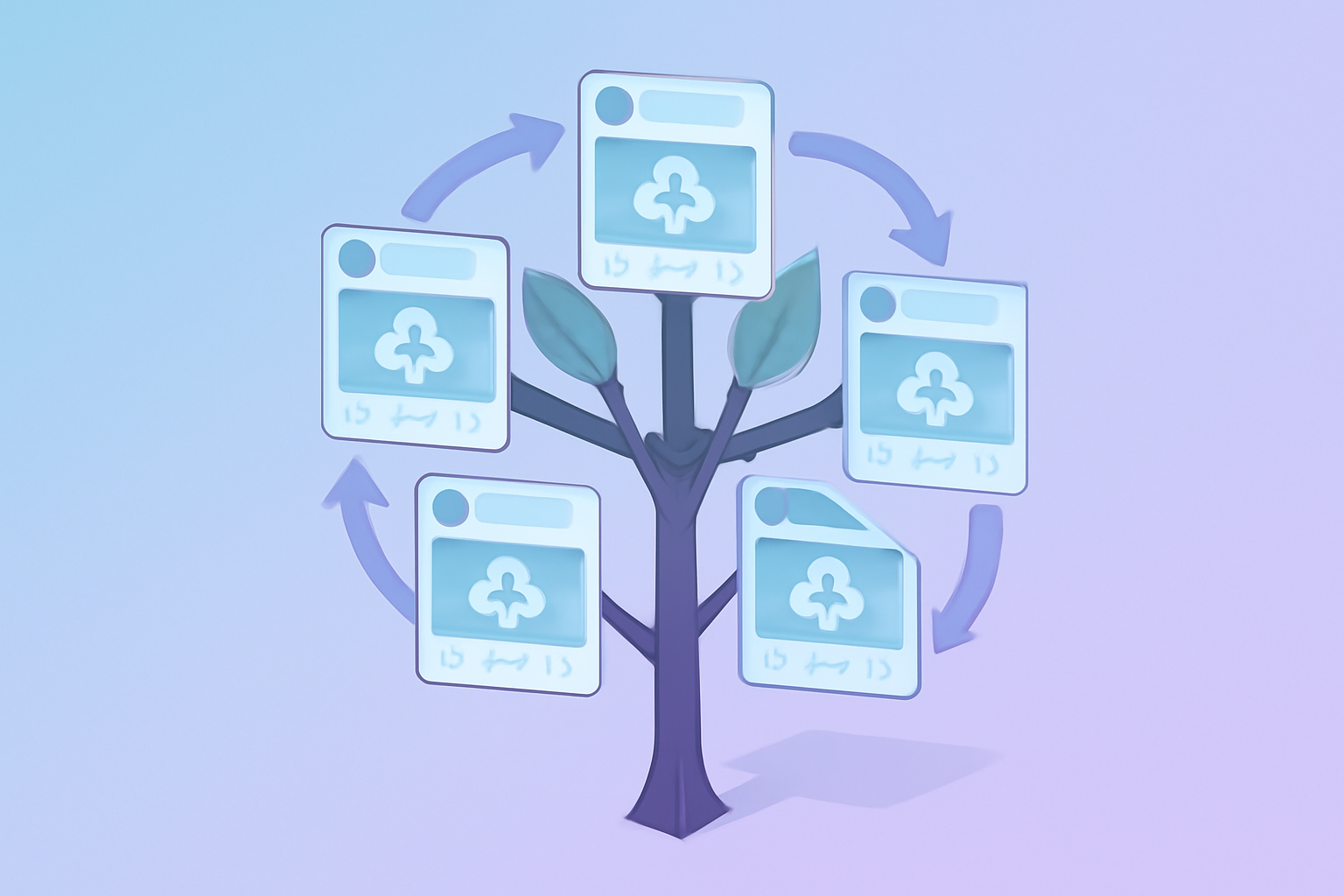
Most tweets have a half-life measured in hours. Evergreen tweets are different. They work the day you publish them and they still work six months later. The reason is structural: evergreen content addresses a problem, principle, or insight that does not expire. You can recycle the same evergreen tweet four times a year with slight variations and each version performs roughly as well as the original.
This guide breaks down what makes a tweet evergreen in 2026, the seven categories that consistently work for evergreen content, how to identify your own strongest evergreens from historical posts, the recycling workflow that adds 30-50% to your weekly output without new writing, and the tools that automate evergreen rotation. With weekly post volume averaging 17.34 in 2026 per Metricool's 2026 study, evergreen recycling is how serious creators sustain cadence without burnout.
What Makes a Tweet "Evergreen" in 2026?
A tweet is evergreen when its value does not depend on context, recent events, or specific time references. The same idea works in January and July. The same hook lands in 2026 and 2028.
Evergreen tweets share four characteristics:
- No time-bound references: No "this week," "yesterday," or specific dates that age the content.
- Universal applicability: The principle or insight applies to a broad situation, not a specific event.
- Foundational truth: Addresses something that does not change quickly (human behavior, fundamental skills, persistent problems).
- Repeatable format: Structure works in multiple variations without feeling stale.
The opposite of evergreen is "topical": tweets tied to news events, trending topics, or recent platform changes. Topical tweets can produce huge spikes but their value plummets within 48 hours.
Why Evergreen Tweets Matter in 2026
Three reasons evergreens are more valuable than ever.
1. Cadence pressure. Average weekly posts grew 8% to 17.34 in 2025. Hitting that cadence with all-original content is exhausting. Evergreens fill the gap.
2. Reach contraction. Average impressions per post dropped 5.3% year over year. Each new tweet captures fewer eyeballs, so squeezing more value from your best ideas matters more.
3. Audience refresh. Your audience in March 2026 is meaningfully different from your audience in March 2025. New followers have not seen your old tweets; recycling exposes evergreen ideas to fresh viewers.
According to Digital Applied's 2026 marketing report, accounts using evergreen recycling produce roughly 40-60% more weekly tweets without measurable engagement drop versus accounts writing every post from scratch.
The Seven Categories of Evergreen Tweets
Studied across 1,000+ high-performing evergreens. Seven categories appear repeatedly.
1. Foundational Principles
Core truths in your niche. "Engagement rate matters more than follower count" is evergreen because the principle does not change.
2. Frameworks
Compact systems for thinking or working. "How to write a viral thread in 5 steps." Frameworks work because they compress reusable patterns.
3. Mistakes and Anti-Patterns
"5 mistakes that kill your X engagement." Mistakes are evergreen because they keep happening. Updates only when a new mistake category emerges.
4. Definitions
"Engagement velocity: the rate of interactions in the first 30 minutes after posting." Glossary-style content stays useful forever.
5. Specific Outcomes
"How I got my first 10,000 X followers." Personal stories with specific outcomes resonate as long as the story is true.
6. Tools and Resources
"3 free X analytics tools that work in 2026." Update annually to refresh tool names but the structure stays evergreen.
7. Counterintuitive Insights
"Posting more on X is hurting your reach." Contrarian takes work whenever the conventional wisdom they oppose persists.
Most successful evergreen libraries draw from 3-4 of these categories, not all seven. Match to your niche and voice.

How to Identify Your Strongest Evergreens
Three diagnostic methods.
1. Sort by Engagement Rate
Open analytics.x.com. Sort your last 90 days of posts by engagement rate. The top 10-20 are candidates. Read each. Eliminate the time-bound ones (events, news reactions, specific dates). What remains is your evergreen seed list.
2. Look for Tweets You Could Republish Word-for-Word
If you would not change anything to repost a tweet today, it is evergreen. If small edits would make it work, it is semi-evergreen (still useful with refresh).
3. Audience Repeat-Engagement
If multiple followers replied "this is gold" or "saving this," the tweet has evergreen utility. Bookmarks and reposts are stronger evergreen signals than likes.
Most accounts identify 10-25 strong evergreens from a 90-day window. That seed library can be recycled for years.
The Evergreen Recycling Workflow
Five-step process that adds 8-15 weekly tweets without new writing.
Step 1: Build Your Evergreen Library
Use the diagnostic methods above to identify 10-25 strong evergreens. Save them in a notes app or spreadsheet with engagement metrics.
Step 2: Tag by Category
Categorize each evergreen by the seven categories above. Helps with variety in scheduling.
Step 3: Create 3 Variations Each
For every original evergreen, write 2-3 wording variations. Same idea, different hook, different examples. Prevents duplicate content flag.
Step 4: Schedule on Rotation
Set up a 90-day rotation cycle. Each evergreen gets republished once per quarter with a different variation. Over a year, each evergreen produces 4 posts.
Step 5: Mix With Originals
Aim for 30-40% evergreen content in your weekly mix. The rest is fresh originals. Pure evergreen feeds feel stale; pure original burns you out.
Most accounts following this workflow add 30-50% to weekly output. Our engagement rate guide covers how to measure the lift versus pure-original cadence.
Tools That Automate Evergreen Recycling
| Tool | Cost | Evergreen Feature | Best For |
|---|---|---|---|
| Hypefury | $19+/month | Recycle Plug-In (auto-rotation) | X-focused creators |
| Buffer | $6+/month per channel | Manual scheduling, no auto-recycle | Cross-platform queuing |
| SocialBee | $30+/month | Category-based recycling | Multi-platform automation |
| MeetEdgar | $30+/month | Strong evergreen library | Solopreneurs |
| X Native Scheduler | Free | No auto-recycle (manual only) | Light usage |
| Xarmy AI Scheduler | Free to start | AI variation generation + engagement community | Creators serious about growth |
For creators serious about evergreen volume, Hypefury or MeetEdgar's auto-recycle is worth the $19-$30/month. The variation-generation features prevent duplicate content flags while sustaining cadence.
Common Evergreen Mistakes
Five patterns that turn evergreen recycling into spam.
- Identical text every cycle: X flags duplicate content. Always vary at least 30% of the wording.
- Too short rotation cycle: Recycling the same tweet every 14 days feels repetitive. 90-day minimum.
- Pure evergreen feed: 100% recycled content makes you look bot-driven. Aim for 30-40% evergreen.
- Outdated stats: Recycling a tweet with 2024 data in 2026 dates you. Refresh numbers annually.
- No engagement post-recycle: Same as original posts; show up for the first 30 minutes to build velocity.

How Evergreens Connect to Audience Growth
Evergreens disproportionately attract new followers. When a new visitor lands on your profile (after seeing your post in feed), the most recent tweets they see should demonstrate the value your bio promises. Mixing strong evergreens into your recent feed lifts profile-to-follow conversion.
Profile clicks across X dropped 31% year over year (8.29 to 5.68 per post on average). Each profile visit has higher intent in 2026, which means the visitor's first 5 tweets need to convince them. Evergreens that capture your best insights consistently land that conversion.
Our audience growth guide covers the full conversion funnel from feed appearance to follow. For real engagement velocity on every recycled post, our AI-powered platform matches your content with 10,000+ verified creators in your niche, ensuring even your fourth recycle of an evergreen lands with the first-30-minute signal that triggers amplification.
A 30-Day Evergreen Library Plan
Three-phase process to build a library that fuels months of content.
Week 1: Audit and Identify
Pull your last 90 days of posts. Sort by engagement rate. Identify 15-20 evergreen candidates. Save in a library document.
Week 2: Tag and Variant Generation
Categorize each evergreen. Use ChatGPT or Claude to generate 2-3 wording variations per evergreen. Save 45-60 total variations.
Week 3: Schedule Rotation
Set up a 90-day rotation using Hypefury, SocialBee, or MeetEdgar. Distribute evergreens across time slots that match peak engagement windows.
Week 4: Measure
Compare your aggregate engagement rate during the evergreen rotation to the prior 30-day baseline. Most accounts see equal or higher engagement, plus 30-50% more weekly output.
Frequently Asked Questions
What is an evergreen tweet?
An evergreen tweet is content whose value does not depend on time, news, or current events. The same tweet works in January and July, and can be recycled with variations every 90 days. Foundational principles, frameworks, mistakes, and definitions are the most common evergreen categories.
How often can I recycle an evergreen tweet?
Every 90 days is safe with sufficient wording variation (30%+ change). Shorter cycles feel repetitive; longer cycles miss audience refresh. Tools like Hypefury and MeetEdgar handle the rotation automatically and generate variations to prevent duplicate content flags.
How many evergreen tweets should I have in my library?
Most successful creators build a library of 20-50 evergreens. With 2-3 variations each (60-150 total drafts), you can fill 8-15 weekly tweets from the library indefinitely. Combine with 60-70% fresh originals to maintain feed freshness.
A well-built evergreen tweet library is the unsung productivity tool of every consistent X account in 2026. Build it once, recycle it forever, and the cadence pressure of weekly publishing drops dramatically. Try our AI-powered platform for free to combine evergreen recycling with real engagement from 10,000+ verified creators, the formula that consistently lifts every recycled post above its previous performance.