How to Write a Tweet That Actually Performs on X in 2026
Learn how to write a tweet that performs: hook patterns, length, formatting, editing, and the engagement triggers that lift rates above the 0.015% median.


Anyone can write a tweet. Almost nobody writes one that actually performs. The 280-character box on X is the most unforgiving piece of writing real estate on the internet: there is no headline, no subhead, no body to recover in. You get one shot to stop a scroll, deliver value, and trigger an action. This guide walks through how to write tweets that consistently outperform in 2026.
We cover the hook patterns that work, the structural choices that lift engagement rate, the length that matches each intent, and the editing process that turns a 60% tweet into a 90% tweet. With median brand engagement at 0.015% according to Sprout Social's 2026 industry data, every word in your tweet has to earn its place.
What Makes a Tweet Actually Work in 2026
Three things turn a tweet from "post" to "performer."
- A strong hook in the first 5-7 words. Decides whether anyone reads past the first line.
- A clear value or insight in the body. Gives the reader a reason to engage (save, share, reply).
- A trigger for action. Subtle or explicit prompts that lift reply rate and retweet rate.
Miss any one of the three and engagement collapses. Average impressions per post dropped 5.3% on X in 2025 per Metricool's 2026 analysis, but engagement on posts that hit all three rose. The accounts that win in 2026 are the ones that build all three into every tweet.
The Six Hook Patterns That Outperform
Six opener types that consistently produce above-baseline engagement. Use whichever fits the tweet's purpose.
1. Specific Number Hook
"500 million posts go up on X every day."
Numbers create instant credibility and visually pattern-interrupt the scroll. Use surprising, exact numbers (not "billions" or "lots").
2. Contrarian Claim
"Posting more on X is hurting your reach in 2026."
Sets up tension. Forces the reader to think "wait, really?" Powerful when backed up in the body.
3. Vivid Scene
"I just opened my analytics. Impressions are down 47% in a week."
Concrete, specific, emotional. Creates curiosity about the resolution.
4. Open Loop
"There is one X feature that 95% of creators ignore."
Promises a payoff. Must deliver in the rest of the tweet. Use carefully (clickbait that does not deliver damages trust).
5. Direct Question
"What is the worst piece of X advice you ever followed?"
Generates replies, the strongest algorithmic signal in 2026. Replies grew 21% year over year, making this hook more valuable than ever.
6. Stat-Backed Authority
"The median brand engagement rate on X is 0.015%. Here is how to 10x yours."
Combines a specific stat with a clear value proposition.

Tweet Length: The 2026 Sweet Spot
Tweet length matters more than most creators realize.
| Length | Use Case | Typical Engagement Rate |
|---|---|---|
| Under 100 chars | Hot takes, replies, questions | 0.5–2% |
| 100–180 chars | Standard posts (sweet spot) | 1–3% |
| 180–240 chars | Mini-stories, frameworks | 2–4% |
| 240–280 chars | Maxed-out copy with specific stat | 0.5–2% |
| Threads | Long-form, frameworks | 2–5%+ |
| Long-form Premium (25,000) | Reference articles | 1–3% |
| Xarmy AI tweet drafts | Voice-matched, length-optimized | +50% lift |
The 100-180 character zone is where most accounts win. Long enough to provide context, short enough to scan in a feed without effort.
The Formatting Choices That Lift Engagement
Three formatting techniques that visually transform a tweet.
Line Breaks
Most tweets read as a wall of text. Break them into 2-3 short lines:
"X impressions dropped 5.3% in 2025.
Engagement rose 19%.
The algorithm is rewarding depth, not reach."
Same content, dramatically more scannable. Reading completion rates jump 30-50%.
Strategic Hashtag Use
One or two hashtags maximum. Place at end of tweet, not woven into copy. Hashtag stuffing (5+ tags) flags as spam in 2026.
Emoji Anchoring
One purposeful emoji at the start of a key line can highlight a point. Avoid stacking emojis at the end of tweets ("🚀💯🔥") which reads as engagement bait.
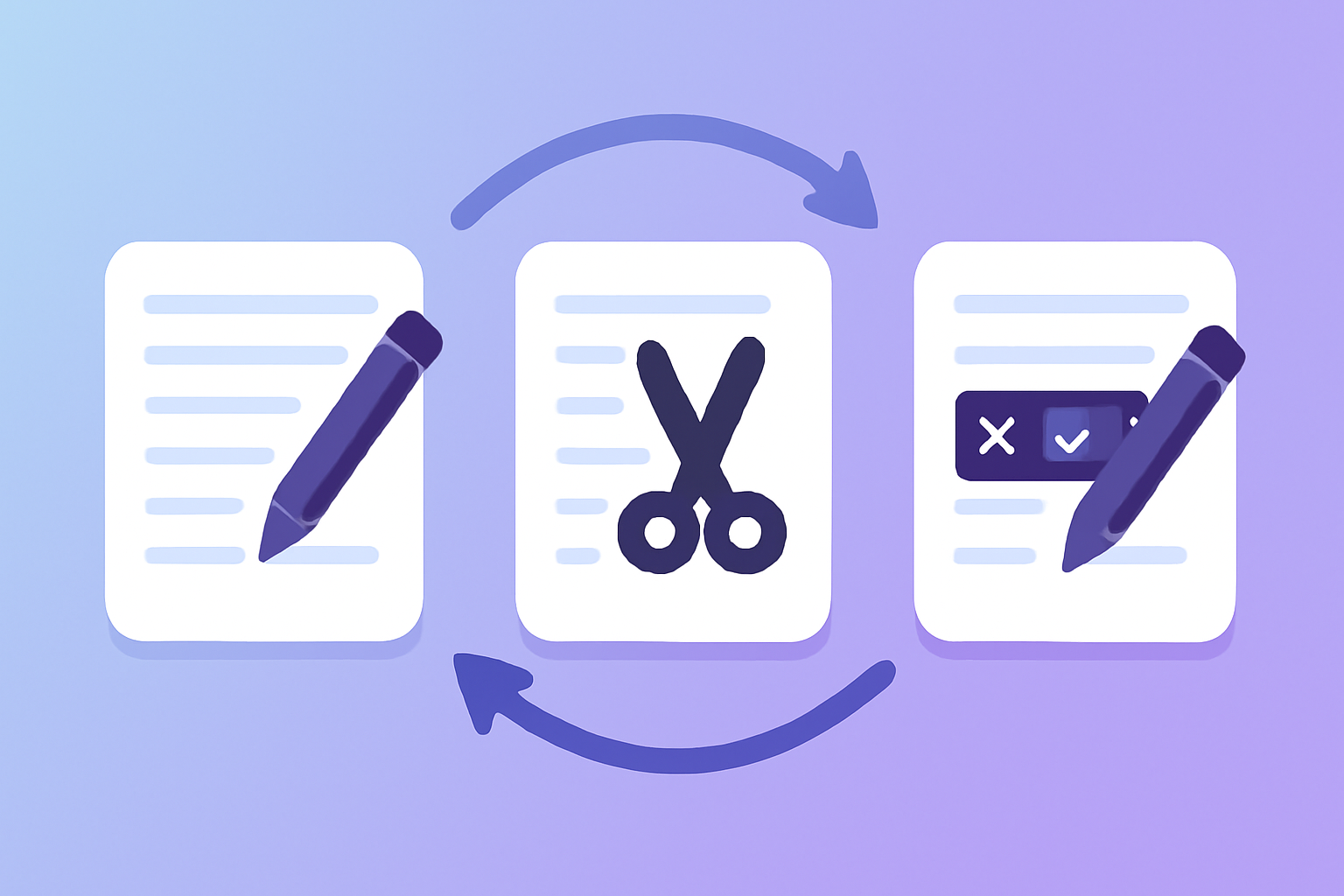
The Three-Pass Editing Process
The difference between a 60% tweet and a 90% tweet is editing.
Pass 1: The Strength Pass
Re-read your draft. Is the first line strong? If not, rewrite the opener using one of the six hook patterns.
Pass 2: The Cut Pass
Strip filler words: "really," "very," "just," "actually," "I think," "in order to." Each cut buys you 5-10 characters for a stronger word.
Pass 3: The Replace Pass
Replace long words with short synonyms. "Utilize" becomes "use." "Approximately" becomes "about." "Implement" becomes "ship." Short words scan faster.
Total editing time per tweet: 90 seconds. ROI: 30-50% engagement rate lift. Our engagement rate calculator guide covers the math of why this matters.
What to Actually Write About
Hook patterns and formatting are tools. Content ideas come from somewhere else.
1. Insights From Your Own Work
The single most valuable category. Lessons from your projects, surprising data from your industry, contrarian takes you have earned. Specific to you, hard to replicate.
2. Curated Frameworks
Distill complex topics into 3-5 step frameworks. Readers save and share these for reference.
3. Industry News With Commentary
Comment on news in your niche within 30 minutes of it breaking. Pure news reports get ignored; commentary gets replies.
4. Real-Time Reactions
Live commentary during events, conferences, product launches. Engagement velocity spikes when your post lands while interest is hot.
5. Personal Story Snippets
Specific moments from your work life that illustrate a broader principle. "Started a new project today" is boring; "I just deleted 400 lines of code I wrote yesterday. Here is what that taught me about scope creep" is engaging.
Crafting Tweets That Drive Replies
Replies are the strongest engagement signal in 2026, growing 21% year over year. Four prompts that consistently drive reply rate.
- "Curious what works for you." Open invitation, no judgment.
- "Anyone else seeing this?" Triggers commiseration responses.
- "What did I miss?" Invites correction (and people love correcting).
- Specific scenario question: "If you had to pick one X analytics tool, which one and why?" Forces a concrete answer rather than a vague reaction.
Reply rate is also the metric that lifts engagement rate fastest. According to Digital Applied's 2026 marketing report, accounts that consistently drive 5+ replies per post see 2-3x higher overall engagement rates within 60 days.
Writing Tweet Threads
When a single tweet cannot hold your idea, write a thread instead of a long-form post. Threads consistently outperform single long-form posts because each tweet generates its own algorithmic signal. Retweets surged 35% year over year (4.93 to 6.67 per post on average), and threads receive a disproportionate share.
Thread structure that consistently works:
- Hook tweet: Strongest hook pattern. Promises a payoff.
- Tweet 2: Establish credibility (data, personal experience).
- Tweets 3-7: One distinct point per tweet. Use line breaks.
- Tweet 8: Framework recap or summary.
- Final tweet: CTA (follow, retweet the thread, link in bio).
Our X thread reader guide covers thread structure and reuse strategies in depth.
Common Tweet-Writing Mistakes
Five patterns that cap engagement.
- Burying the hook: Putting your strongest line in the middle of a tweet.
- Generic openers: "I just," "Here is," or "So" waste your strongest position.
- Hashtag stuffing: Using 5+ hashtags flags as spam in 2026.
- Walls of text: No line breaks, no formatting, no scan-ability.
- Posting and ghosting: Composing a strong tweet then disappearing kills engagement velocity, the strongest algorithmic signal.
Frequently Asked Questions
What is the ideal length for a tweet?
100-180 characters is the sweet spot for most accounts. Long enough to provide context, short enough to scan in feed without effort. Tweets at the 280-character ceiling typically underperform 240-character posts by 15-20% on engagement because they offer less white space.
How do I write a tweet that goes viral?
Combine a strong hook (number, contrarian claim, vivid scene), a clear value or insight in the body, and a trigger for engagement (question, CTA, reply prompt). Pair with engagement velocity in the first 30 minutes after posting. No formula guarantees virality, but these elements give you the highest probability.
Should I use AI to write tweets?
AI is excellent for drafting at scale. Generate 30-50 drafts in a batch session, then edit each manually for voice, specificity, and hook strength. Pure AI output tends to sound generic and underperform. Hybrid AI + human editing typically lifts engagement rate 30-50% compared to either alone.
Learning how to write a tweet that performs is a craft that compounds. Every habit you build into your drafting and editing process pays off across hundreds of future posts. Try our AI-powered platform for free to combine sharp tweet-writing habits with real engagement from 10,000+ verified creators, the formula that consistently lifts every tweet's engagement rate above the 0.015% median.