LinkedIn and Twitter (X): Complete Cross-Platform Strategy for 2026
LinkedIn and Twitter (X) serve different audiences and reward different formats; full 2026 guide on cross-posting strategy, cadence, and platform-specific tactics.


Should you be on LinkedIn and Twitter? For most professional creators and B2B brands in 2026, the answer is yes, but with platform-specific approaches. The two networks reward different content types, audiences, and engagement behaviors. Copying tweets directly to LinkedIn (or vice versa) consistently underperforms native content tailored to each platform's culture.
This guide breaks down how LinkedIn vs Twitter (X) compare in 2026: audience composition, engagement benchmarks, format winners, posting cadence, content strategy, and how to run both platforms efficiently without doubling your workload. By the end you will have a clear framework for which platform deserves more attention based on your goals.
Why Run Both LinkedIn and X in 2026
Each platform reaches a different professional audience.
LinkedIn (1+ billion users)
The platform of record for professional networking, B2B sales, hiring, and career content. Users come with explicit professional intent. Average engagement rates on LinkedIn for top creators run 0.5-2%, much higher than X's brand median.
Twitter/X (560 million monthly active users)
The platform for real-time conversation, news commentary, niche communities, and direct creator relationships. Faster-paced, more conversational. According to Metricool's 2026 study of 1.1 million posts, retweets surged 35% year over year while impressions per post declined 5.3%.
Why Both
For B2B brands and creators, LinkedIn drives qualified leads and long-term relationships; X drives real-time relevance and rapid audience growth. Combining the two captures both pipelines.
LinkedIn vs X: Side-by-Side
| Dimension | Twitter (X) | |
|---|---|---|
| Audience size (MAU) | 1+ billion | 560 million |
| Median engagement rate | 0.5-2% (creators) | 0.015% (brands), 1-5% (creators) |
| Best content format | Long-form posts, carousels, articles | Threads, short tweets, native video |
| Optimal post length | 1,200-2,000 characters | 100-180 characters (single tweets) |
| Posting cadence | 2-5 per week | 15-30 per week |
| Audience intent | Professional, long-term | Real-time, conversational |
| Algorithm priority | Native long-form, comment engagement | Engagement velocity, native content |
| Monetization paths | Lead gen, LinkedIn Newsletter, ads | Creator revenue share, subscriptions, sponsored posts |
| Xarmy support | — | AI-powered engagement community |
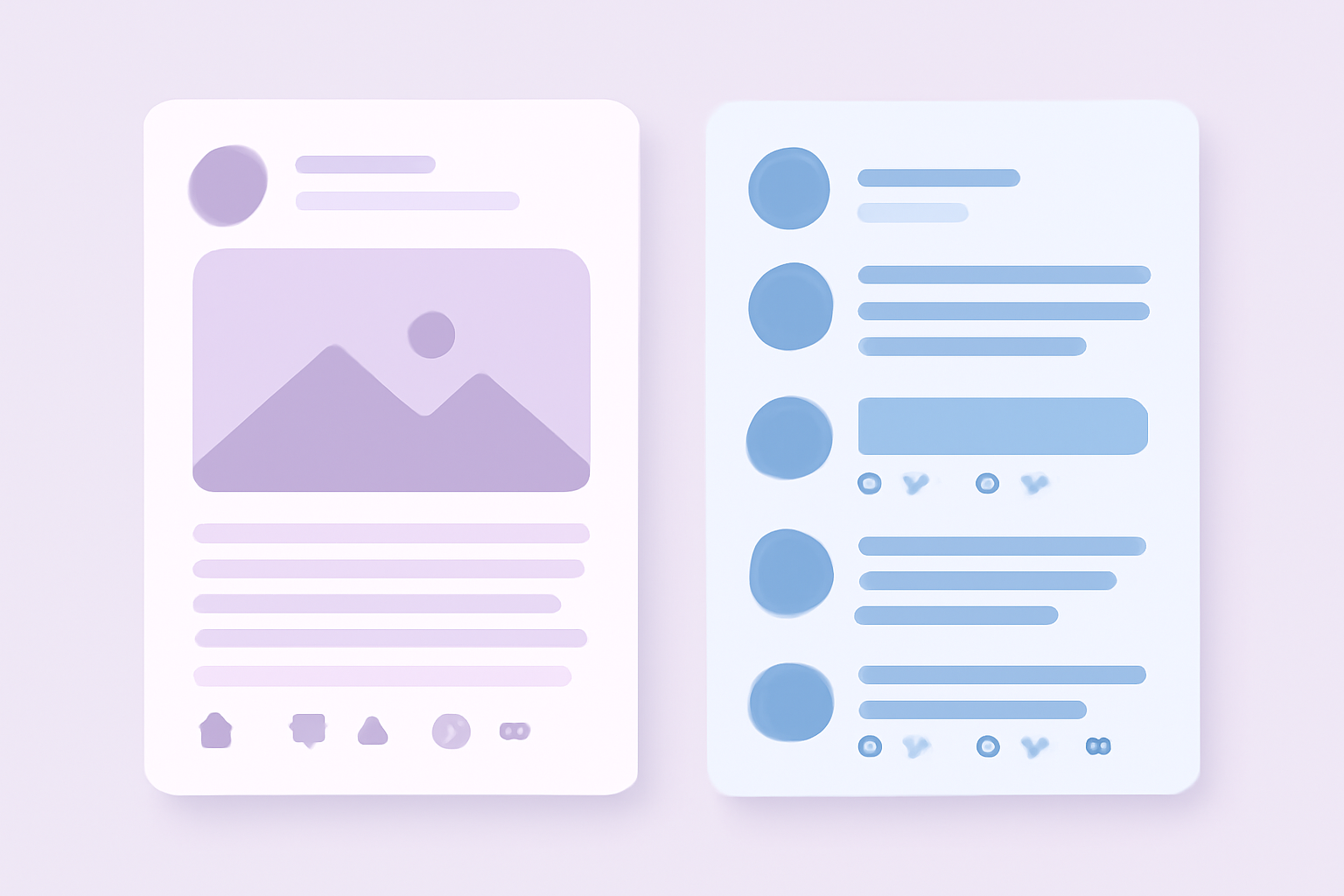
The biggest practical difference: LinkedIn rewards depth, X rewards speed. Both reward consistency, but the format and cadence differ dramatically.
What Works on LinkedIn That Fails on X
Three content patterns that thrive on LinkedIn but underperform on X.
1. Long-Form Personal Stories
LinkedIn audiences expect 1,200-2,000 character posts with detailed personal narratives. X audiences scroll past anything over 200 characters in a single tweet.
2. Achievement Announcements
"Honored to announce" posts crush on LinkedIn. They sound out of place on X, where directness rules.
3. Corporate Voice
LinkedIn tolerates formal language better than X. X audiences engage with informal, opinionated, even contrarian voice.
What Works on X That Fails on LinkedIn
Three patterns that thrive on X but underperform on LinkedIn.
1. Hot Takes and Contrarian Claims
"Posting more on X is hurting your reach" gets retweeted on X. The same post on LinkedIn often draws negative reactions from professionals expecting measured tones.
2. Real-Time News Reactions
Commenting on industry news within 30 minutes works on X. LinkedIn moves slower; same-day reactions are fine, but the velocity advantage of X disappears.
3. Threads
X threads outperform single tweets by 2-5x on engagement. LinkedIn does not natively support threads; long-form posts serve a similar function but require different structure.
The Smart Cross-Posting Strategy
Pure cross-posting (copying content verbatim across platforms) consistently underperforms. The strategy that works:
1. Create Once, Adapt Twice
Generate the core idea once. Then create two distinct versions: long-form for LinkedIn, thread or short tweet for X. Use AI tools to accelerate adaptation.
2. Match Platform Culture
LinkedIn version: more formal language, longer setup, professional context. X version: sharper hook, conversational tone, faster payoff.
3. Different Hashtag Strategy
LinkedIn: 3-5 hashtags work well. X: 1-2 maximum (more flags as spam per Sprout Social's 2026 data).
4. Stagger Posting Times
LinkedIn peaks Tuesday-Thursday 8-10 a.m. local. X peaks Tuesday-Thursday 12-6 p.m. local. Post LinkedIn first, then adapted X version 2-4 hours later.
5. Cross-Reference Carefully
Including LinkedIn URLs in X tweets, or X URLs in LinkedIn posts, reduces engagement on both platforms (each penalizes off-platform links). Use cross-references sparingly and only when contextually relevant.
The Two-Platform Posting Cadence
Recommended weekly cadence for accounts running both.
- LinkedIn: 2-5 posts per week. Deep, considered content. One long-form per week minimum.
- X: 15-30 posts per week. Mix of threads (2-3), images (5-8), and standalone tweets (10-20).
Total weekly content production: 17-35 posts across both platforms. Roughly 90-120 minutes of focused work per week with the right AI tooling and scheduling stack.
Combining Both for Maximum ROI
Three plays that compound across both platforms.
1. The Newsletter Bridge
Build an email list with content that appears on both platforms. Each platform drives newsletter signups; the newsletter is the durable owned asset.
2. The Cross-Platform Thread
Publish a thread on X. Three days later, repurpose the same content as a long-form LinkedIn post with expanded analysis. Each platform's audience sees the strongest format for their preference.
3. The Cross-Audience Recommendation
Occasionally mention your other platform with a specific value proposition. "If you want the long-form breakdown, my LinkedIn post on this goes deeper" or "Daily quick tips: follow me on X." Done sparingly, this doubles your audience.
According to Digital Applied's 2026 marketing report, B2B creators running both platforms with adapted content see 60-100% higher lead generation than single-platform creators.
Where to Focus When You Cannot Do Both Equally
Three scenarios that suggest emphasizing one platform.
Focus LinkedIn If
- Your buyer is enterprise B2B (CEOs, CTOs, VPs)
- Your offering requires long-form thought leadership
- Your sales cycle is 3+ months
- You sell consulting, executive coaching, or enterprise software
Focus X If
- Your audience is creators, marketers, or tech professionals
- Your offering benefits from real-time relevance
- Your sales cycle is short (days to weeks)
- You sell digital products, consumer SaaS, or creator services
Split Evenly If
- Your audience spans both LinkedIn and X (most B2B SaaS)
- You have multiple offerings spanning enterprise and consumer
- You can dedicate 4+ hours per week to social content
Common Cross-Platform Mistakes
Five patterns that waste effort.
- Verbatim cross-posting: Identical content on both platforms underperforms because audiences expect different styles.
- Wrong hashtag strategy: Using X's 1-2 hashtag rule on LinkedIn (where 3-5 work) or LinkedIn's 5+ on X (which flags as spam).
- Skipping engagement on one platform: Posting on both but only engaging on one. The unengaged platform stagnates.
- Cross-promoting too aggressively: Mentioning your "other platform" every post. Audience tunes out.
- Same posting time across timezones: Each platform's peak windows differ. Hitting both requires adapted schedules.
Tools That Help Manage Both
| Tool | Cost | Supports | Best For |
|---|---|---|---|
| Buffer | $6+/month per channel | LinkedIn + X + others | Cross-platform scheduling |
| Hootsuite | $99+/month | Both + analytics | Agency multi-account |
| Hypefury | $19+/month | X-focused, LinkedIn add-on | X-first creators |
| Taplio | $39+/month | LinkedIn-focused | LinkedIn-first creators |
| Xarmy (X engagement layer) | Free to start | X amplification | X velocity signal |
Most cross-platform creators use Buffer or Hootsuite for scheduling, plus a platform-specific engagement layer (Hypefury for X, Taplio for LinkedIn, or our AI-powered platform for X engagement velocity).
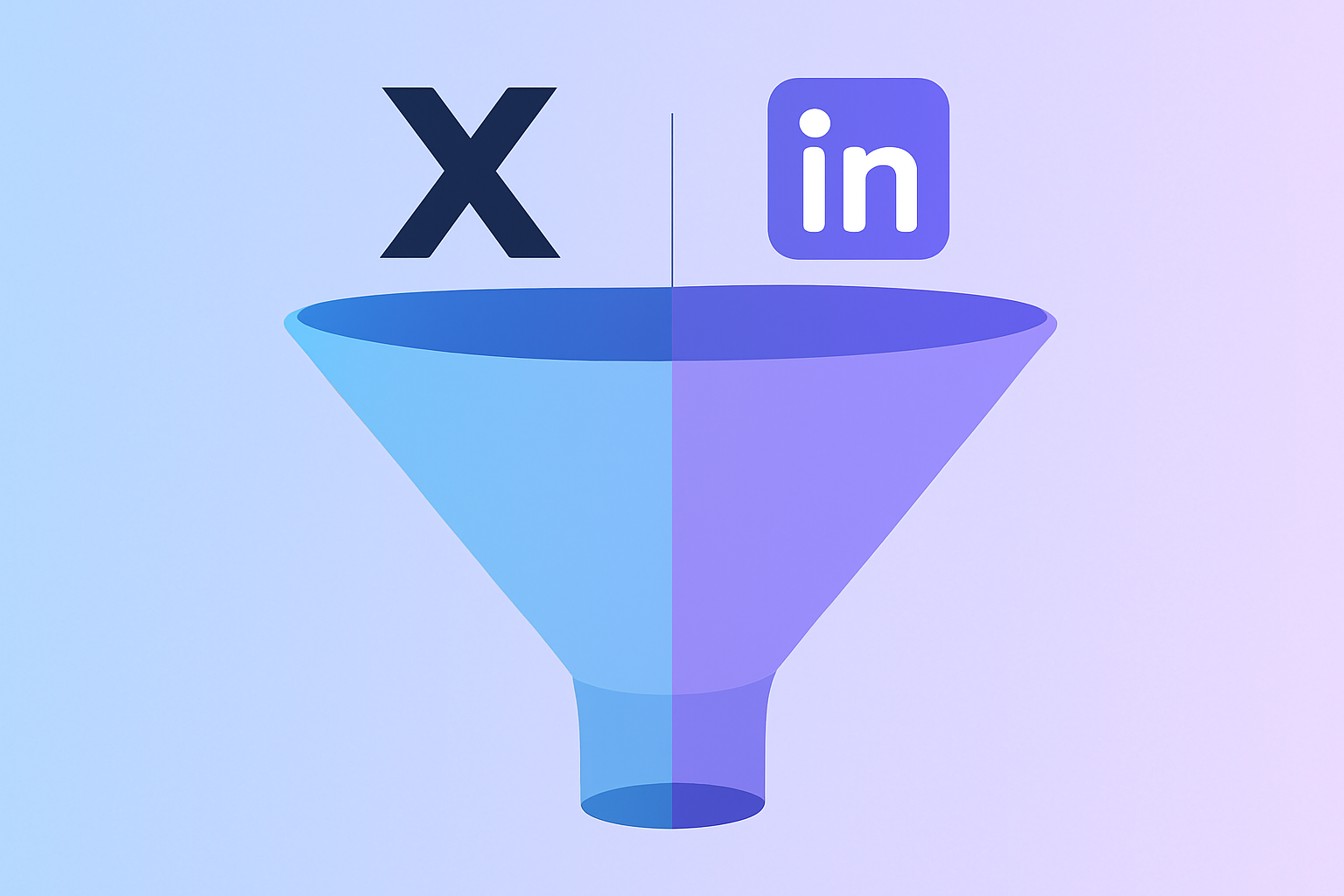
How LinkedIn and X Drive Different Stages of the Funnel
The combined funnel.
Top of Funnel: X
Wide-reach discovery, real-time relevance, viral potential. X exposes you to new audiences fast.
Middle of Funnel: Both
Audience building, content depth, brand familiarity. Both platforms work here, in different ways.
Bottom of Funnel: LinkedIn
Lead generation, B2B sales, long-form proof points. LinkedIn closes deals.
Our Twitter analytics deep dive covers how to measure the contribution of each platform to your overall funnel.
Frequently Asked Questions
Should I be on both LinkedIn and Twitter (X) in 2026?
For most professional creators and B2B brands, yes. LinkedIn drives qualified leads and long-term relationships; X drives real-time relevance and rapid audience growth. Running both with platform-adapted content captures both pipelines. The exception: pure consumer brands or hyper-specialized niches may benefit from single-platform focus.
Can I cross-post the same content to LinkedIn and X?
Verbatim cross-posting consistently underperforms. The platforms reward different styles, lengths, and tones. The right approach: create the core idea once, then adapt twice for each platform's culture. Use AI tools to accelerate adaptation. Result: 2-3x better engagement than pure cross-posting.
Which platform should I prioritize if I only have time for one?
Depends on your buyer. Enterprise B2B with long sales cycles: prioritize LinkedIn. Creators, marketers, or tech professionals with shorter cycles: prioritize X. Mixed B2B SaaS audiences: pick the platform you enjoy more (your enjoyment drives consistency, which beats platform choice).
Running LinkedIn and Twitter together in 2026 multiplies your audience and your funnel. Adapt content per platform, match cadence to audience culture, and the combined ROI exceeds either platform alone. Try our AI-powered platform for free to amplify your X presence with real engagement from 10,000+ verified creators, the formula that consistently lifts X reach while you build LinkedIn separately.