Twitter Best Practices to Maximize Your Reach in 2026


Overall engagement on X posts rose by 19% between 2024 and 2025, even as impressions dipped by 5%, according to Statista data sourced from Metricool. That shift signals a fundamental change in how the platform rewards content: raw visibility matters less than genuine interaction. If you are investing time in X, understanding the best practices for Twitter is no longer optional; it is the difference between growing an engaged audience and shouting into the void.
Whether you are a solo creator, a startup founder, or part of a marketing team, what worked two years ago may be holding you back today. The platform now favors entertainment, short-form video, and community participation over passive link sharing. This guide distills the most current data and proven tactics into a clear framework you can apply immediately, starting with choosing the best time of day to tweet and building from there.
Why Engagement, Not Impressions, Defines Success on X
For years, marketers measured their X performance primarily by impressions. In 2026, that metric tells only part of the story. The shift from 2024 to 2025 shows a community that is posting more (up 8%), sharing more (up 35%), and talking more (up 21%). Meanwhile, profile clicks dropped by 31%, from an average of 8.29 per post in 2024 to 5.68 in 2025.
What does this mean for your twitter best practices? A repost is a much stronger endorsement than a like. It says, "I want my own audience to see this." This growth suggests that viral loops are the primary way content survives in 2026. In practical terms, your goal should be to create posts that people want to share with their own followers, not simply acknowledge with a quick tap.
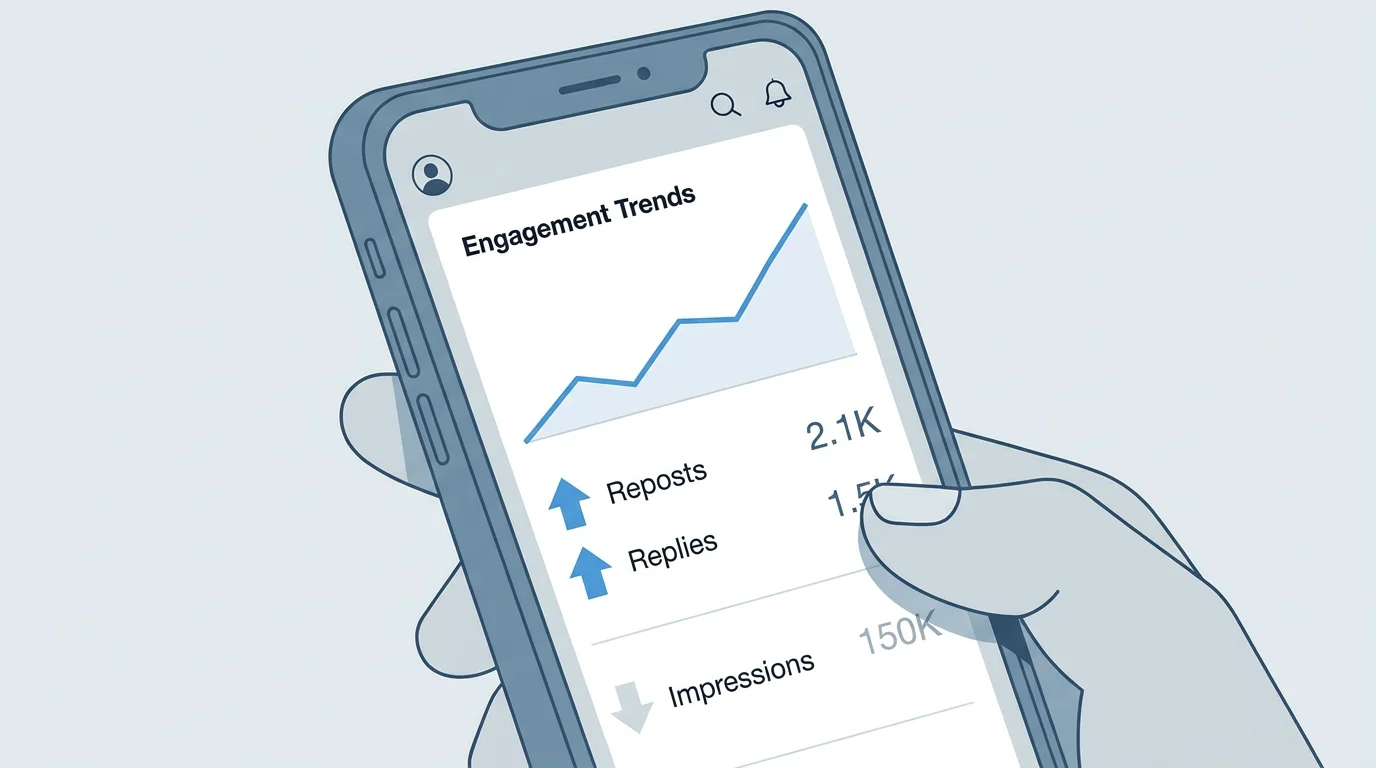
The platform is shedding passive scrollers and retaining active participants. If your engagement is climbing even though impressions appear flat, you are actually succeeding in the current version of X. Focus your energy on sparking conversation and earning reposts rather than chasing vanity metrics.
Optimizing Your Posting Frequency and Schedule
How often should you post? In 2025, the average number of weekly posts grew by 8%, moving from 15.97 to 17.34. That translates to roughly two to three posts per day. For marketers, this 8% jump suggests that the sweet spot for posting frequency is moving upward. To stay top of mind, brands are realizing that a single daily update is no longer enough to maintain a presence.
Consistency matters more than volume, however. Posting ten times in one day and then disappearing for a week confuses the algorithm and your audience alike. Build a content calendar with themed days and scheduled slots so you maintain a steady rhythm.
Timing is equally critical. According to Sprout Social's study on the best times to post on Twitter, brands see the most engagement on Tuesdays, Wednesdays, and Thursdays, with 12 to 6 p.m. tending to be the most engaging hours. That said, this may vary depending on the day of the week, so use your analytics to understand the best time to post for your business. Our guide on Twitter engagement rate offers deeper benchmarks you can compare against your own data.
Content Formats That Drive Interaction
The format of your posts directly shapes how far they travel. Short-form video has finally surpassed text-based posts on X: according to the 2026 Social Media Content Strategy Report, 37% of users are most likely to interact with short-form video from brands. Text-based posts follow closely at 36%, according to the same report.
For accounts with larger followings, the data is even more striking. According to Digital Applied's 2026 marketing data analysis, among accounts above 50K followers, 87% post primarily text, yet image posts outperform text by 30% on engagement, and video posts by 47%. The platform rewards a calibrated mix rather than a single-format strategy, and quote-tweet replies still beat first-degree replies by 18%.
Here is a practical content mix to consider:
- Short-form video (under 60 seconds): ideal for tutorials, quick takes, and behind-the-scenes moments.
- Text-based posts: strong for opinion threads, industry commentary, and community questions.
- Image posts: useful for data visualizations, quotes, and product highlights.
- Quote tweets: amplify others' content while adding your own perspective.
A well-rounded approach ensures you reach different segments of your audience. If you are looking for specific structural guidance, our resource on tweet format covers character limits, media specifications, and layout tips.
The Entertainment-First Shift: What Your Audience Actually Wants
The 2026 Social Media Content Strategy Report found that entertainment was the top reason for brand interaction, followed by customer care. This marks a significant departure from earlier years when informational content dominated. According to the Digital 2026 Global Overview Report, nearly 60% of users use the platform to stay on top of news and current events. The takeaway is that your audience comes for the news but stays for the entertainment.
When determining your overarching content strategy, prioritize entertainment. Consumers now want to be entertained on X above all else, representing a major shift from previous years. That does not mean every post needs to be humorous. Entertainment can include compelling storytelling, provocative questions, surprising data, or creative visuals that stop the scroll.

Brands that lean into this shift will find their reposts and replies climbing. Those that continue to push dry, promotional content will struggle for visibility in an algorithm that increasingly prioritizes active conversation.
Building Community Through Active Engagement
Since replies are up 21%, the comments section of your post is where the real marketing happens. Posting content is only half the equation. Responding to replies, participating in trending conversations, and supporting others' posts are all essential tactics for sustainable growth.
A practical framework for daily engagement:
- Spend 15 minutes replying to comments on your own posts.
- Leave thoughtful comments on five to ten posts from accounts in your niche.
- Repost (with commentary) at least one piece of content from a peer or industry voice.
- Monitor brand mentions and keywords to catch indirect references.
This kind of community-driven participation signals to the algorithm that your account is an active contributor, not a broadcast channel. If scaling this manually feels overwhelming, our Twitter growth hacks guide outlines strategies to streamline the process while keeping engagement authentic.
Navigating the Algorithm: Native Content Over External Links
One of the most consequential changes in how X operates is its treatment of external links. External link click-through rates fell from 1.8% in 2024 to 1.2% in 2026, reflecting the algorithm's continued de-prioritization of off-platform traffic. For brands, this raises the value of native content (long-form Articles, video, Spaces) and lowers the ROI of pure traffic-driver posts.
This does not mean you should never share links. It means you need to rethink how you do it. Consider these approaches:
- Share the core insight or value within the post itself, then add the link in a reply.
- Use X's native long-form Articles feature for in-depth content instead of linking to a blog.
- Host Spaces (live audio conversations) to discuss topics you would otherwise link out to.
- Create short video summaries of external content to keep users on the platform.
The algorithm rewards posts that keep users engaged on X. Adapting your link strategy to that reality will help you maintain reach while still driving traffic where it matters most.
Profile Optimization and Brand Consistency
Your profile is the first impression for anyone discovering your content. The "For You" feed has become so efficient that users make split-second decisions based on the content of the post itself, rather than the credentials in the bio. That said, when someone does visit your profile, it must clearly communicate who you are and what value you offer.
Key elements to audit regularly:
- Bio: state your value proposition in one or two lines. Include a relevant keyword or two.
- Pinned post: showcase your strongest recent content or a clear call to action.
- Header image: use this space for a visual that reinforces your brand or current campaign.
- Website link: direct visitors to a landing page aligned with your current goals.
Consistency across your profile and your posts builds trust. Audiences are more likely to follow and engage with accounts that present a clear, cohesive identity.
Measuring What Matters: Key Metrics for 2026
With the platform's shift toward active engagement, the metrics that define success have evolved. Here is how to prioritize your analytics:
| Metric | Why It Matters in 2026 | Benchmark (2025 Data) |
|---|---|---|
| Reposts | Strongest signal of content endorsement; drives viral loops | 6.67 avg. per post (up 35% YoY) |
| Replies | Indicates active conversation; boosts algorithmic visibility | 2.56 avg. per post (up 21% YoY) |
| Likes | Low-effort signal; still most common interaction | 32.89 avg. per post (up 8% YoY) |
| Engagement Rate | Overall health of audience interaction | 0.035% median; top brands reach 0.08% |
| Video Views | Key for short-form content strategy | Video outperforms text by 47% in reach |
These benchmarks, drawn from Metricool's 2026 social media study of over 1.1 million posts, provide a solid reference point. Compare your own numbers against them to identify where you are excelling and where you have room to improve.
For a deeper look at how to interpret these figures, our resource on how to go viral on Twitter connects metric analysis with actionable content strategies.
Putting It All Together: Your Action Plan
Mastering the best practices for Twitter in 2026 requires a blend of consistent publishing, format diversity, entertainment value, and authentic community participation. The data is clear: reposts are up 35%, replies are up 21%, and the algorithm rewards conversation over passive consumption. Every post you publish is an opportunity to spark a discussion that extends your reach.
Start by auditing your current posting frequency and format mix. Increase your weekly output toward the 17-post benchmark, diversify into short-form video if you have not already, and commit to daily community engagement. Track reposts and replies as your primary success indicators, not impressions alone.
Platforms like ours are designed to make this process faster and more effective. With AI-powered matching that connects your content with the right audience and real engagement from verified accounts, we help you build momentum that compounds over time. Get started free with our AI-powered engagement community and turn these best practices into measurable growth.
Frequently Asked Questions
How many times per day should I post on X in 2026?
Data from 2025 shows the average weekly posting frequency rose to 17.34 posts per week, which translates to approximately two to three posts per day. Consistency is more important than volume; avoid posting in bursts followed by long silences. A content calendar with scheduled slots will help you maintain a steady rhythm.
What type of content performs best on X right now?
Short-form video (under 60 seconds) is currently the top-performing format, with 37% of users most likely to interact with it. Text-based posts remain a close second at 36%. A mixed-format approach that includes images, videos, and text will maximize your reach. Xarmy's AI matching can help ensure the right audience sees each format you publish.
Are hashtags still useful on X?
Hashtags remain a discovery mechanism, but their impact has diminished relative to algorithmic distribution through the "For You" feed. Use one to two relevant hashtags per post rather than loading up on them. Focus your energy instead on creating shareable content that earns reposts, which is the primary growth driver on the platform in 2026.